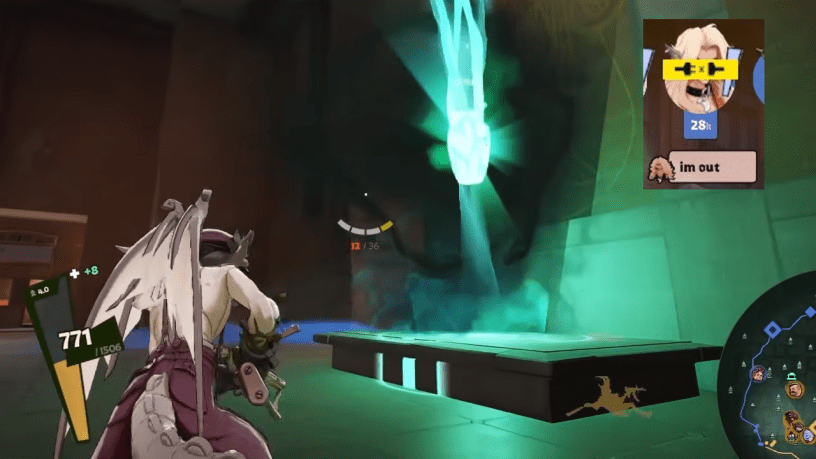
Every esport has matches that have gone down in infamy, that will be talked about for decades after the fact. Some of the most iconic involve a team busting out an unconventional strat that leaves everyone debating whether it should even be legal. CS:GO/CS2 has the infamous “Olofbooster” match, League of Legends has Azubu Frost reaching the World 2 Finals by screen-peeking, Overwatch had the “Brigitte in Spawn” gambit from the 2018 Playoffs. And now Deadlock, despite not having even left alpha yet, has had its own, courtesy of a bizarre interaction between a specific item and a recently-adjusted map element.
But before we cover the game in question, I need to lay some groundwork:
Competitive Deadlock
Yes, Deadlock already has a competitive scene, despite not being remotely finished or even available for download on Steam. It’s actually kinda insane how large this underground community has gotten. There are multiple tournaments and leagues, for thousands of dollars of prize pools and with major sponsors like Intel, Shopify, and Trolli Gummi Worms. The highest-profile, Night Shift, is the focus of this article, carving a reputation for itself as the pre-eminent “Big League” for competitive Deadlock during this nascent era of the game. Tune into any of their frequent livecasts and you’ll see many familiar casters and hosts from the Overwatch League era, as well as players from competitive TF2, Overwatch, Dota 2, and League of Legends. The game’s hybrid shooter/MOBA design leaves multiple onboarding paths for budding players, all excited to be part of Valve’s “next big thing” and see the early days of what has the potential to become Valve’s third major esports juggernaut.

Deadlock Development: The Antebell-urn Period
Valve themselves has largely stayed out of the competitive sector. While certain patches have suggested they’re watching the matches to take notes for balance tweaks, they otherwise are not involved in tournament or league organization, probably waiting to develop their own official scene after the game actually comes out. And because Deadlock is still in early development, it will often make sweeping changes to certain elements in order to stress-test something or to try out alternate methods it could be implemented. The mechanic that matters for this story is the Soul Urn.

The urn is an optional neutral objective designed to engender high-stakes momentous team fights. One would spawn every five minutes, and whichever team grabs it and is able to safely escort the (weaponless) carrier to a dynamic dropzone is rewarded with a bunch of souls and minor stat buffs. Mechanically, it was considered a “comeback mechanic”, in that teams at a disadvantage could prioritize running the urn to balance the soul economy, and certain characters and players (like me) specialized in running the urn. Since it was instant-deposit, there wasn’t a lot an opposing team could do to stop a skilled runner from dunking it into the capture zone from the nearest rooftop.
On May 22nd, Deadlock rolled out an experimental new urn. The capture point was moved to the center of the map, over Midboss, and the non-running team had several seconds after capture to melee the urn and swap it onto their control. Teams with at least 20% fewer souls than their opponent also gained additional defensive buffs in a radius around the urn-holding player. This new urn was quite unpopular, as it quickly led to a “rich get richer” meta where the team in the lead found it much easier to lock down the map and run urns in the background while the losing team lacked any real options to contest. This was only exacerbated by the dropoff now being at mid, meaning the winning team usually celebrated their capture by also killing Midboss immediately afterward.
In response, Valve hotfixed the urn three days later to return the dropoff points to the side lanes, albeit slightly further away than before so most aerial urn routes no longer worked. It mostly buffed the urn runner in several ways and made the comeback mechanics stronger, in an attempt to make the urn more attractive for the losing team. Did it succeed? Well…
Night Shift #40
Three days later, Night Shift had its North American Finals to determine the team that will take on the European top-seeders in this weekend’s Grand Finals for $12,000. The match almost immediately steered into strange waters when one team, Melee Creeps, all used their first 800 souls to purchase Golden Goose Eggs instead of ordinary starter items. This item doesn’t do much at first purchase, but slowly accumulates souls and stat buffs the player can access once they consume the item, destroying it. The biggest breakpoints for consumption rewards are at 10:00 and 15:00 into the match, the same rate at which the comeback urn scales. Do you see where this is going yet?

For the next 10 minutes, Melee Creeps intentionally threw the game, sacking themselves against NPC guardians or taking bad fights to farm up souls for the other team. Floormen quickly realized what they were doing and started avoiding fights, attempting to avoid the soul deficit getting too great. By 10:00, Floormen’s anti-farming strats were successful enough that Melee Creeps hadn’t reached the -20% soul deficit to activate their trap card, so they merely continued throwing the game until 15 minutes in.

At that point, they grab the urn, which was a fully-powered comeback urn thanks to how far behind they were, and pop their Golden Eggs in unison. The team earns over 10,000 souls immediately, slashing their soul deficit to only 10%, and then proceed to treat the urn carrier as a traveling beacon of powerful teamwide buffs. They never attempt to deposit the urn, instead carrying it with them into fights so they can overwhelm map objectives or enemy players with massive defensive urn buffs. Before long, members of Floormen start quitting the match and the team forfeits, crowning Melee Creeps the winners of the North American finals after only ½ a game of the intended Best of 3 format.
Aftermath

Responses to the incident were swift and wide-changing. Night Shift banned the strategy before the stream was even over, communities everywhere weighed in on whether the play was genius or unsportsmanlike (it certainly wasn’t illegal, there were no exploits or cheats used), and Valve hotfixed the urn once more that very same day, implementing several changes transparently designed to dampen that sort of abuse of its comeback mechanics.
As far as the game goes, it’s likely that there will be little actual impact beyond this point. Urn is already altered, and probably will be several more times, and Deadlock is so early in development it could be an entirely different beast by the time it releases in the far future. Those who participated in this game will likely get off scot-free due to not having technically broken any rules. (Tune in this weekend to see if they win the Grand Finals!) The main impact I expect this game will hold is in the minds of long-term esports fans who are looking for engaging storylines to commit to the community conscience. This urn strat was so counterintuitive, and so emblematic of several major community gripes regarding the current urn design, that I have no doubt it’ll be brought up years from now in reddit threads or lowlight reels or simply a point of comparison the next time some future team tries to sandbag to leverage comeback strats. And to me it’s honestly exciting that Deadlock is already getting moments like these, at a time far before most games would even be seen by the general public, much less as part of monetized sponsored tournaments of a professional scene.

The main takeaway I hope you get from this article is that if you’ve ever wanted to see a competitive scene being built from the ground up, Deadlock is the best chance you’re ever going to get. No other game has had this sort of “esports public beta”, especially not one helmed by a hand as seasoned as Valve’s and for a title with this much promise. Its unique hybridization of the two most successful esports genres is already bearing fruit and leading to iconic historical moments, and its worth at least coming along for the ride just so you don’t miss what twists and turns the scene might have in store.

